
Function meets feeling
Cultural space industry events in Venice this summer
June 14, 2025
When it comes to space industry events, visitor experience is naturally driven by positioning.
Business-oriented events jostle for market share by focusing on specific verticals, premiumness, location and pedigree of participants while culturally-oriented space events follow different criteria.
For these space culture-focussed offerings, exhibitor and curator reputations are an inherent draw for visitors, but so too is the diversity and quality of exhibits, and the ways they can be experienced.
Last month in Venice, it was possible to experience both the business and cultural sides of space events with the business-focussed Space Meetings Veneto scheduled alongside the International Architecture Exhibition (which has a surprising amount of space exhibits this year) and the Universe Pavilion.
These cultural events were supported by some of the same government partners that backed Space Meetings Veneto such as ASI and Regione Del Veneto but also commercial space businesses. And despite no official partnership between the events, visitors naturally moved between them too.
Here are a handful of highlights from the International Architecture Exhibition and Universe Pavilion that are worth a look:
The Copernicus Program meets storm-felled construction materials
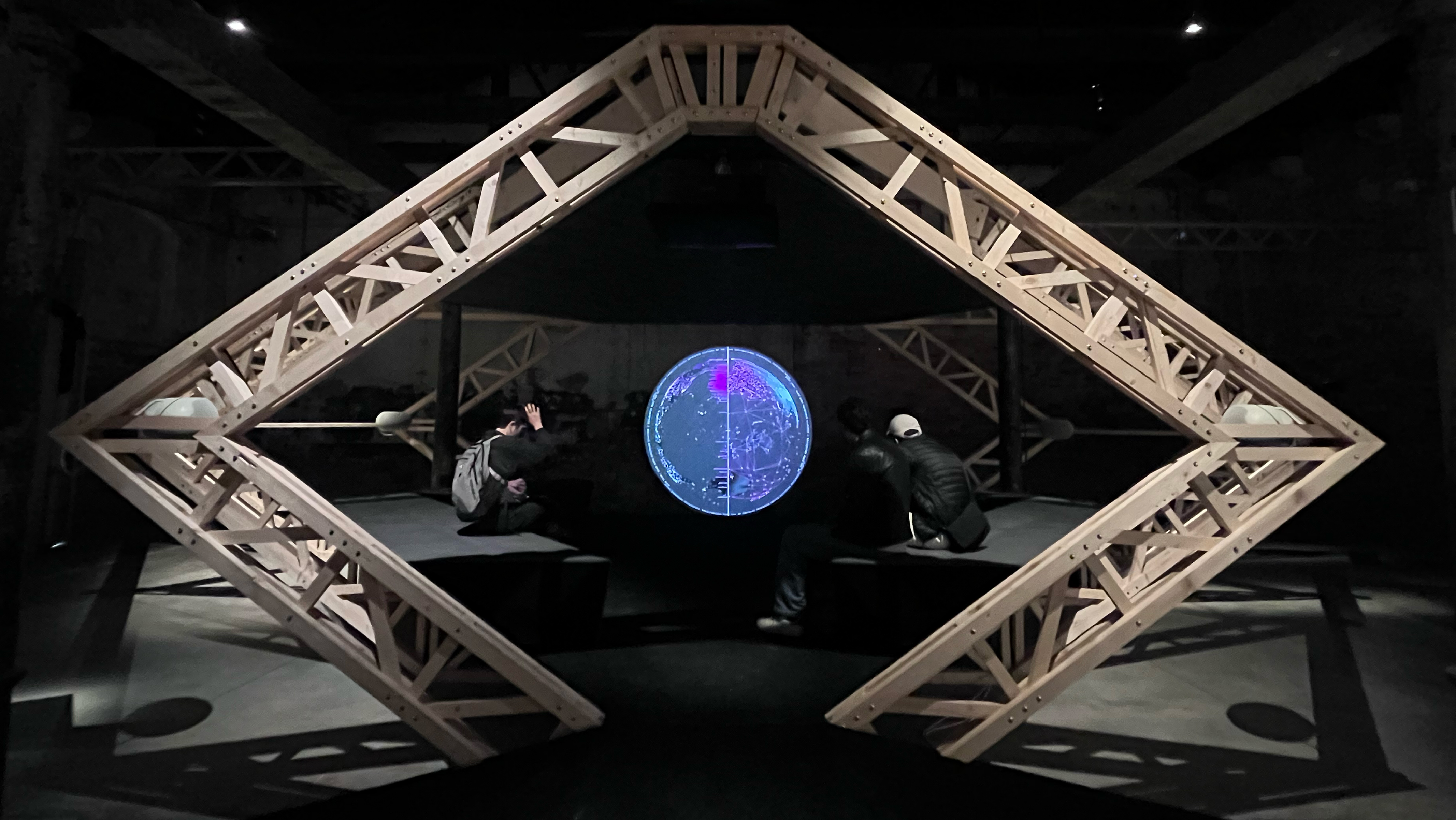
Combining remote sensing data from ESA’s Copernicus program and a walk-in amphitheatre (exquisitely constructed using storm-felled wood), visitors experience the physical and digital artefacts of extreme weather events.
It’s this ability to blend EO data with physical environments that compound its power, allowing visitors to sit on benches made of wood felled by the weather events whose data they viewing.
Exhibit: A Satellite Symphony
Who: Space Caviar, Robert Gerard Pietrusko, Ersilia Vaudo
Where: The Arsenale, Venice
When: Until November 23rd
Shifting the culture of mission control
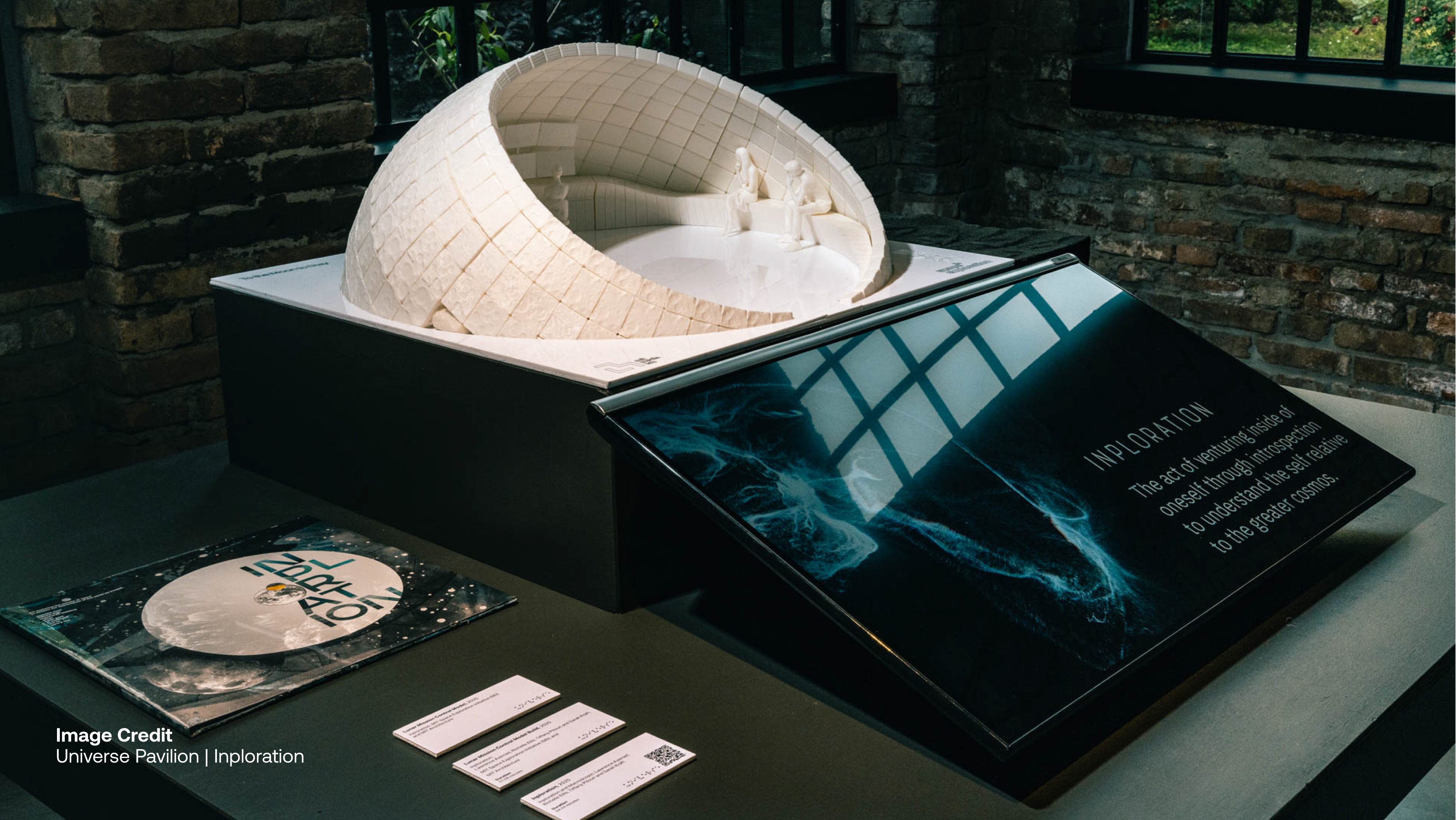
As more companies enter the space domain, we’re seeing a broadening of how mission control is defined. Long associated with closed doors and separated public viewing areas, this intervention rethinks the mission control experience to encourage public access to live lunar operations.
The open structure is composed of unconventional materials including foam glass and lunar-inspired basalt. Built at MIT Media Lab for MIT’s 2025 lunar landing mission, a scale replica is on show at the Universe Pavilion courtesy of art, space and science initiative Inploration co-founded by Richelle Ellis and Lawrence Azerrad.
Exhibit: Lunar mission control station
Who: Inploration, MIT Architecture and MIT Space Exploration Initiative
Where: Universe Pavilion
When: Until July 31st
Sun, soil & paving slabs
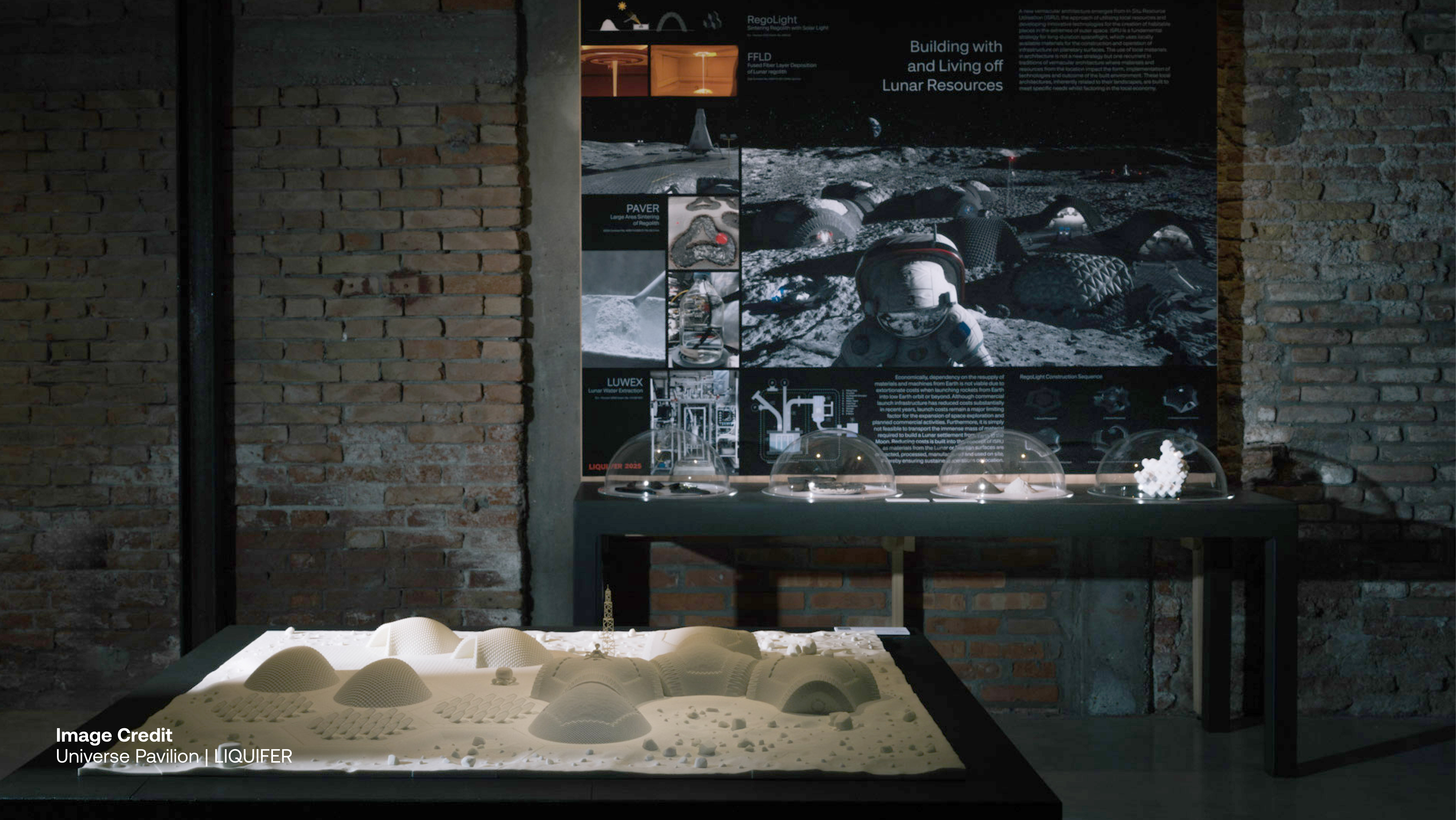
Paving the moon with sunlight and regolith, Vienna-based multidisciplinary space research and product development firm LIQUIFER are developing a stable, consistent paved surface for lunar operations using solar-sintered modules made of lunar soil.
Designed by Nik Thönen and Hannah Sakai, LIQUIFER’s stunningly designed ‘Living Beyond Earth’ book is also on display.
Exhibit: Building with and living off lunar resources
Who: LIQUIFER
Where: Universe Pavilion
When: Until July 31st
Human cargo
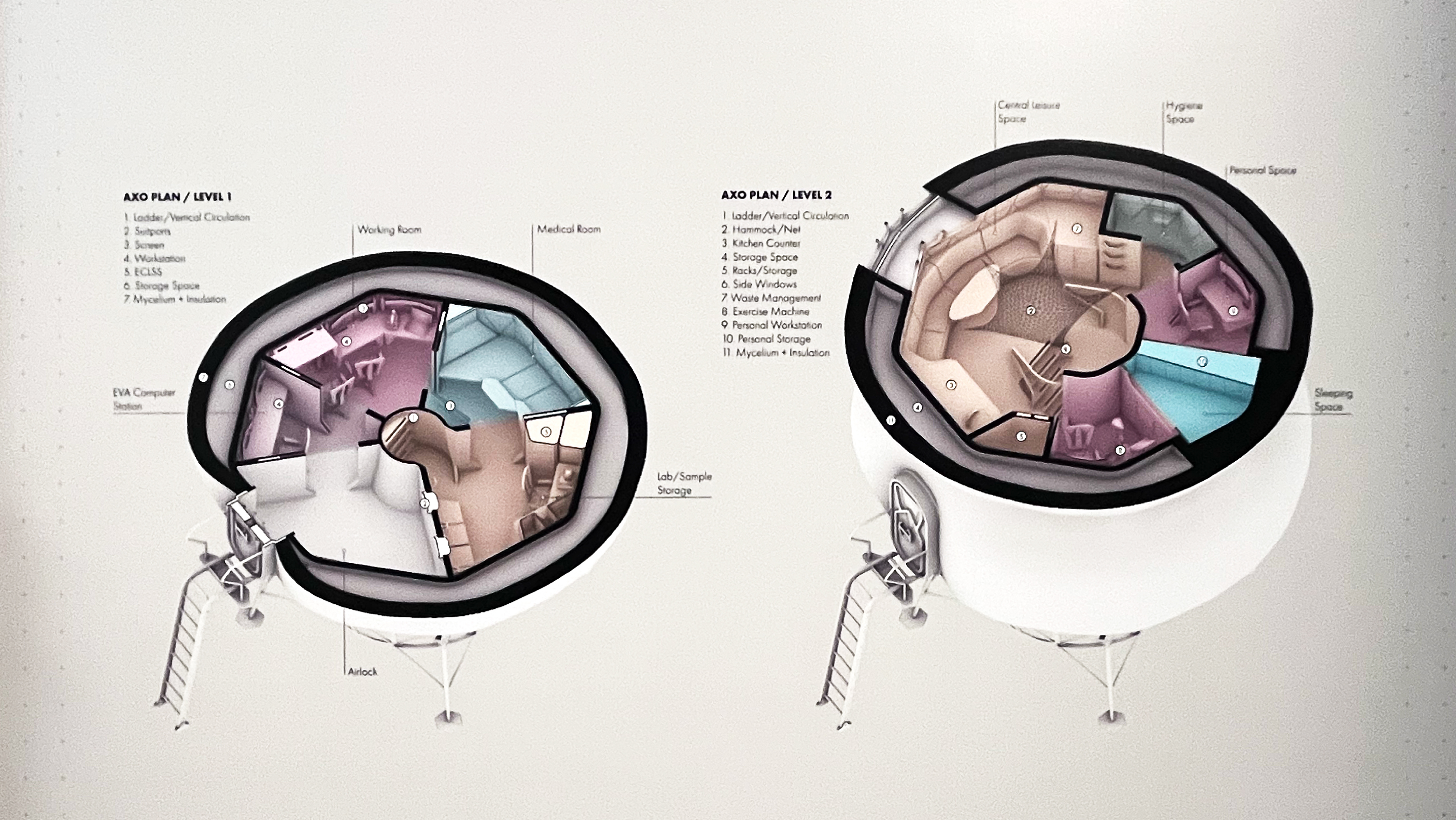
While ESA’s Argonaut lander is designed as a cargo delivery system, a team from MIT Media Lab, ESA and Politechnico di Milano led by Valentina Sumini have repurposed it as a human-rated habitat, shielded from radiation by a wall of mycelium sandwiched between layers of Kevlar.
The project is reminiscent of this quote from Andrew Nahum’s introduction to The Design Museum’s Moving to Mars book:
‘Surely, after a few years of settlement, an extraordinary aesthetic will develop – a mix of supremely high-tech articles shipped from Earth at huge cost, furniture and utensils cannibalised from cast-off spaceship containers and parts or from cargo containers, and maybe other items carved from Martian rock or moulded from the regolith.’
– Andrew Nahum | Introduction: Moving to Mars
Exhibit: Design as an astronaut
Who: Valentina Sumini MIT Space Exploration Initiative, MIT Media Lab, Politecnico di Milano, Cody Paige MIT Space Exploration Initiative, MIT Media Lab, Tommy Nilsson European Space Agency, European Astronaut Centre, XR Lab
Where: The Arsenale, Venice
When: Until November 23rd
The Ancestry of today’s space systems
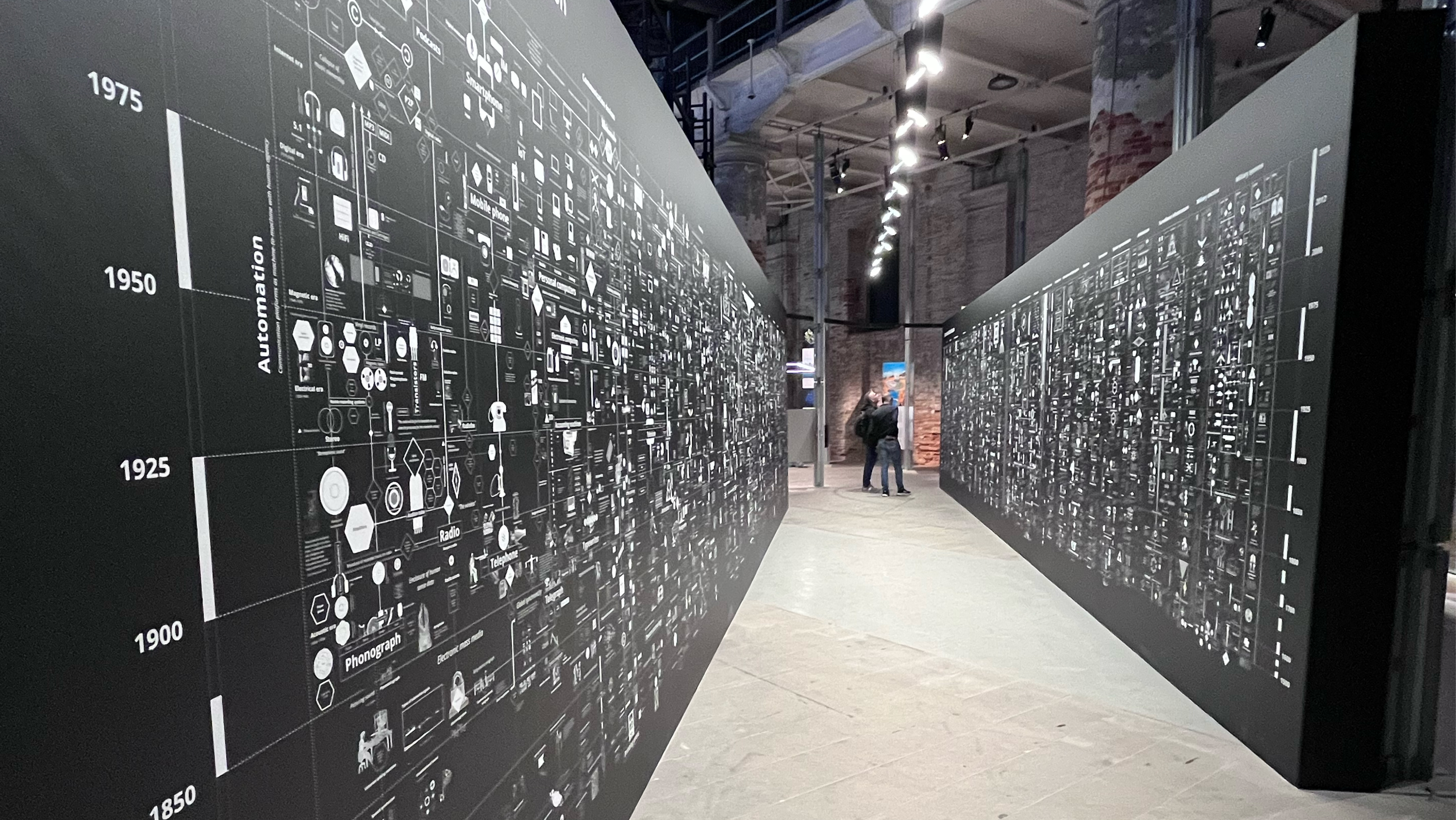
Kate Crawford and Vladan Joler’s epic 24-meter research visualization traces 500 years of tech-fuelled control. In granular detail, it maps the development of communication infrastructure satellites, the astrosphere and military space systems, taking us deep into the ancestry of the space systems we’re grappling with today.
The fully digitised visualisation is available here but nothing beats poring over printed version in-person.
Exhibit: Calculating Empires
Who: Kate Crawford and Vladan Joler
Where: The Arsenale, Venice
When: Until November 23rd
Space hardware like you’ve never seen it before
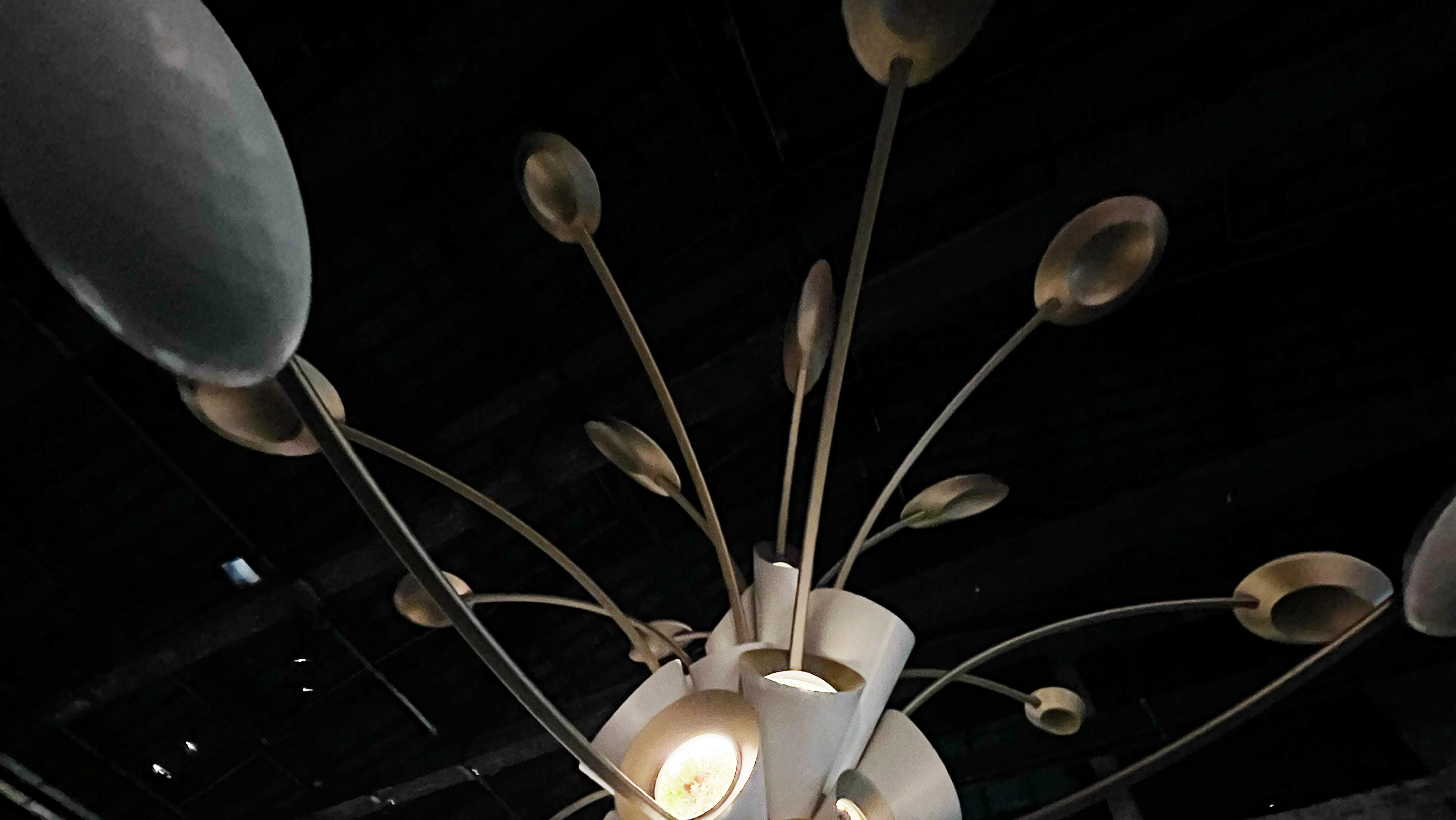
Designed to fit inside the fairings of existing launch vehicles, Heatherwick Studio and the Aurelia Institute have designed a speculative greenhouse for Low Earth Orbit.
The contrast between today’s utilitarian space hardware and this concept is a reminder that there are people out there pushing to humanize the space domain and they’re looking to biomimicry for inspiration. In an industry where public perception gaps are cited as limiting factors, rethinking the design of space hardware is one way to command attention and shift perception.
Exhibit: Space Garden
Who: Heatherwick Studio and Aurelia Institute
Where: The Arsenale, Venice
When: Until November 23rd
Defining home
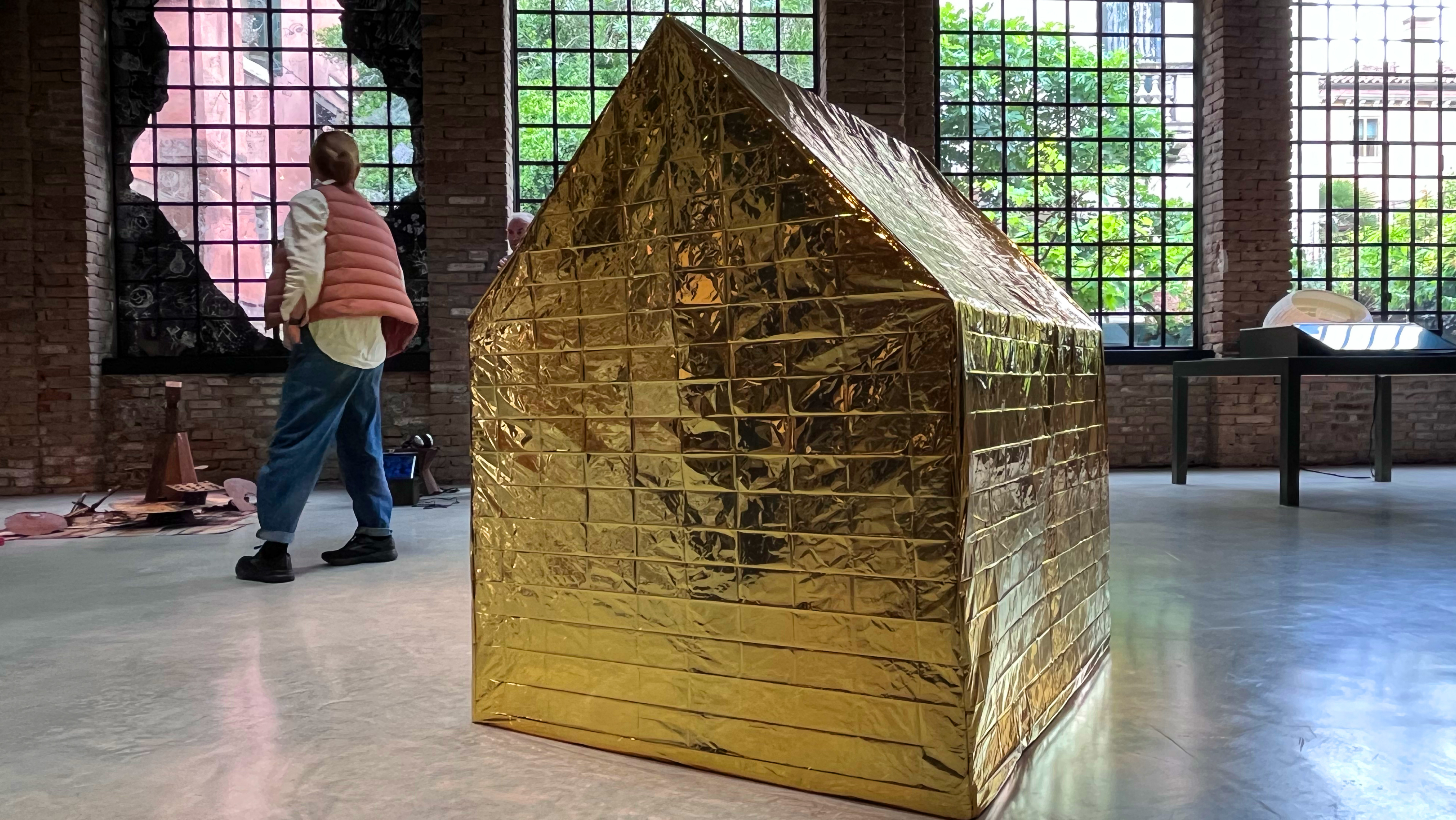
Exploring the tension between contemporary space architecture and typical central European style houses, Janine-Thüngen Reichenbach’s ‘Sapiens’ Space Shelter Home’ is crafted using spacecraft insulation. It invites visitors to ‘reflect on the essence of home, even in the most distant and uninhabitable places’.
Exhibit: Sapiens’ Space Shelter Home
Who: Janine-Thüngen Reichenbach
Where: Universe Pavilion
When: Until July 31st
Final thoughts
For business-focussed space conferences, expos and trade shows, these public-facing shows offer unexpected benchmarks in positioning using visitor experience. For the International Architecture Exhibition and Universe Pavilion, this experience is meticulously curated around variety of exhibits, with exhibitors showcasing diverging approaches to similar questions.
Notably, some of the public perception gaps around the space industry are inadvertently addressed by cultural events like these in a variety of ways.
Whether through Janine-Thüngen Reichenbach’s public-facing use of space grade materials or by Heatherwick Studio and the Aurelia Institute’s approach to humanising architectural design in Low Earth Orbit. Then there’s MIT and Inploration breaking down the established cultural codes around mission control, not by barring public participants, but by welcoming them in instead.
A swing away from visual renders and towards real hardware has been noticeable at business-focussed space events over the past few years as more products with flight heritage hit the market. The way physical objects were presented at the International Architecture Exhibition and Universe Pavilion helps to get these artefacts the attention they deserve.
The walk-in theatre set up for A Satellite Symphony allows participants to immerse themselves in both the data and the physical debris from the weather events it depicts. Visitors can walk around a fully unfurled Space Garden and view cutaways to see inside its greenhouse pods. Navigating exhibits at the International Architecture Exhibition is facilitated by ‘AI Summaries’ of each artefact. These succinct, TLDR overviews allow visitors to capture the essence of each exhibit at a glance before committing to reading the full summary.
While the commercial space industry pushes to open and grow new markets, businesses are primarily focused on function over form. This rubric extends to the myriad conferences, expos and trade shows that represent them.
By contrast, culturally-oriented space events give themselves and their audiences permission to explore the nuance around the edges of the commercial space industry where functional utility gives way to form and feeling.
As practitioners and professionals working in the space industry, we owe it to ourselves to venture outside our silos and take in a different point of view.
This summer Venice offers that opportunity. All of these exhibits are still on right now (as of June 2025) and if you work in the space industry and have a free weekend, they’re worth seeing. The International Architecture Exhibition and Universe Pavilion are running until the 23rd of November and 31st of July respectively. Go to Venice, soak up these shows and get a spritz, you deserve it.
P.S. You’ll find a copy of my space industry branding magazine, Azimuth in the Universe Pavilion too.
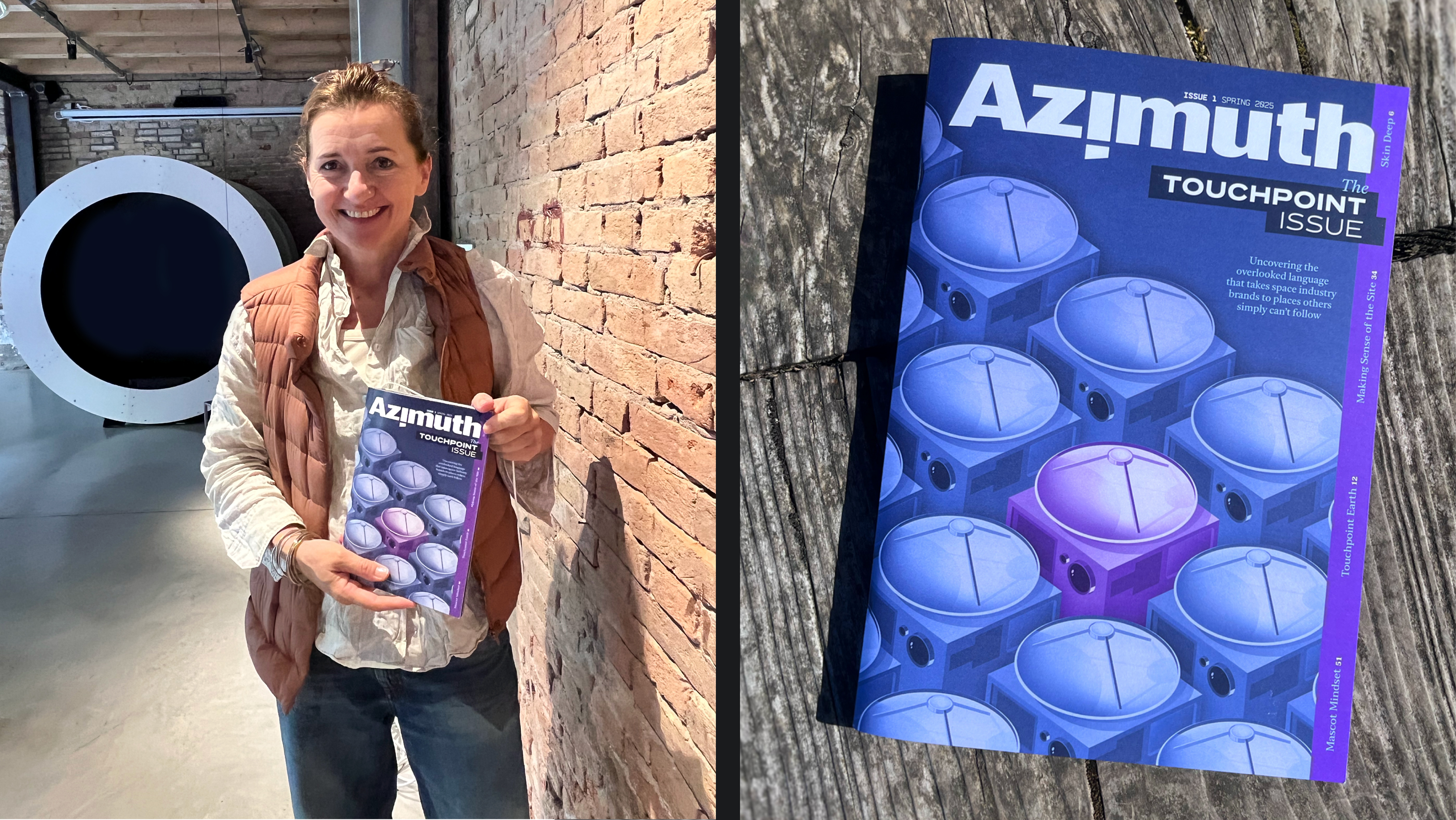
The Universe Pavilion is founded by Claudia Kessler, Janine Thüngen-Reichenbach and curated by Claudia Schnugg.
The International Architecture Exhibition is curated by Carlo Ratti.

 Ed Fyfe Design