
Spot the sat in the stack
The space companies making their hardware work harder
January 31, 2025
When the Transporter-9 mission launched over a year ago, socials were flooded with posts from satellite operators and manufacturers scrambling to identify their hardware in the payload stack.
A flurry of arrows, circles and annotations appeared as each company highlighted their payload amid the palette of dark greys and metallics.
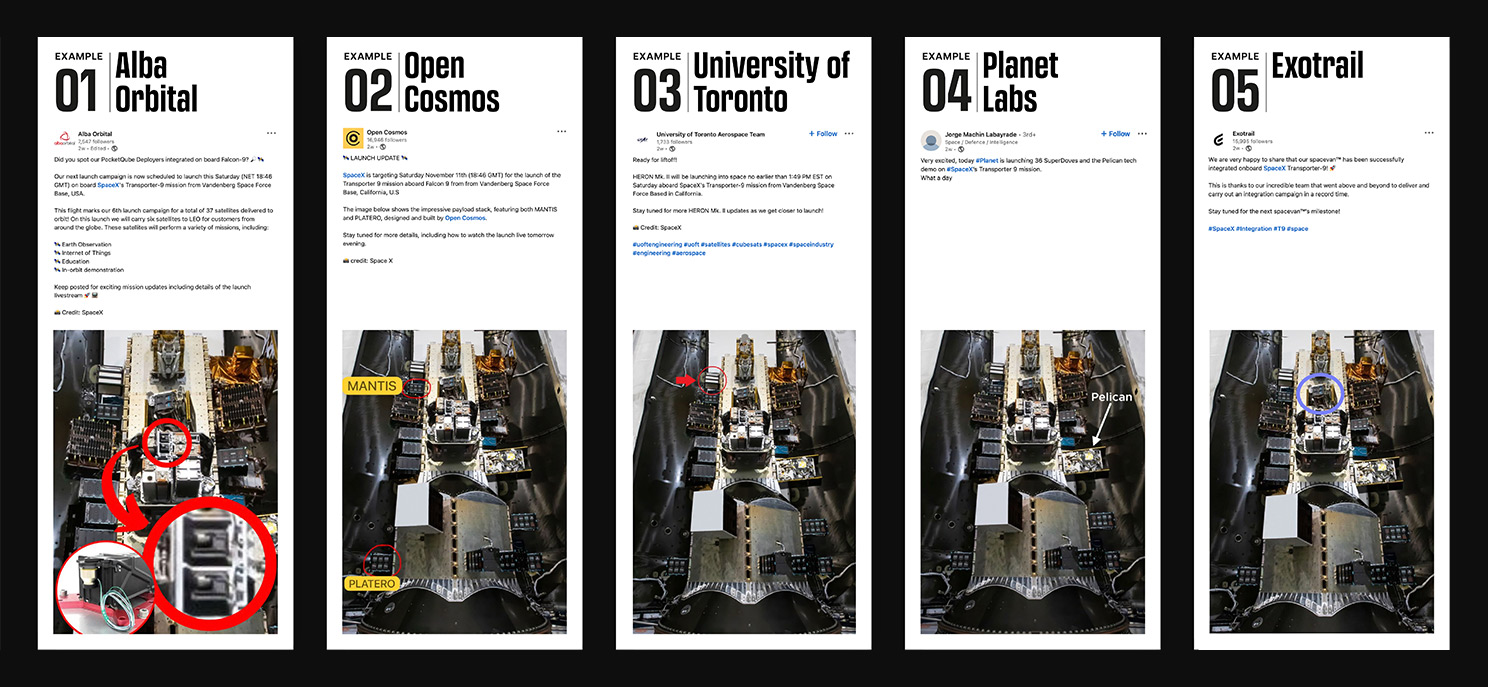
But one brand was easy to spot without all the highlights.
Deployment systems provider Exolaunch have always taken advantage of the uniform aesthetics of space hardware by turning theirs into branded touchpoints.
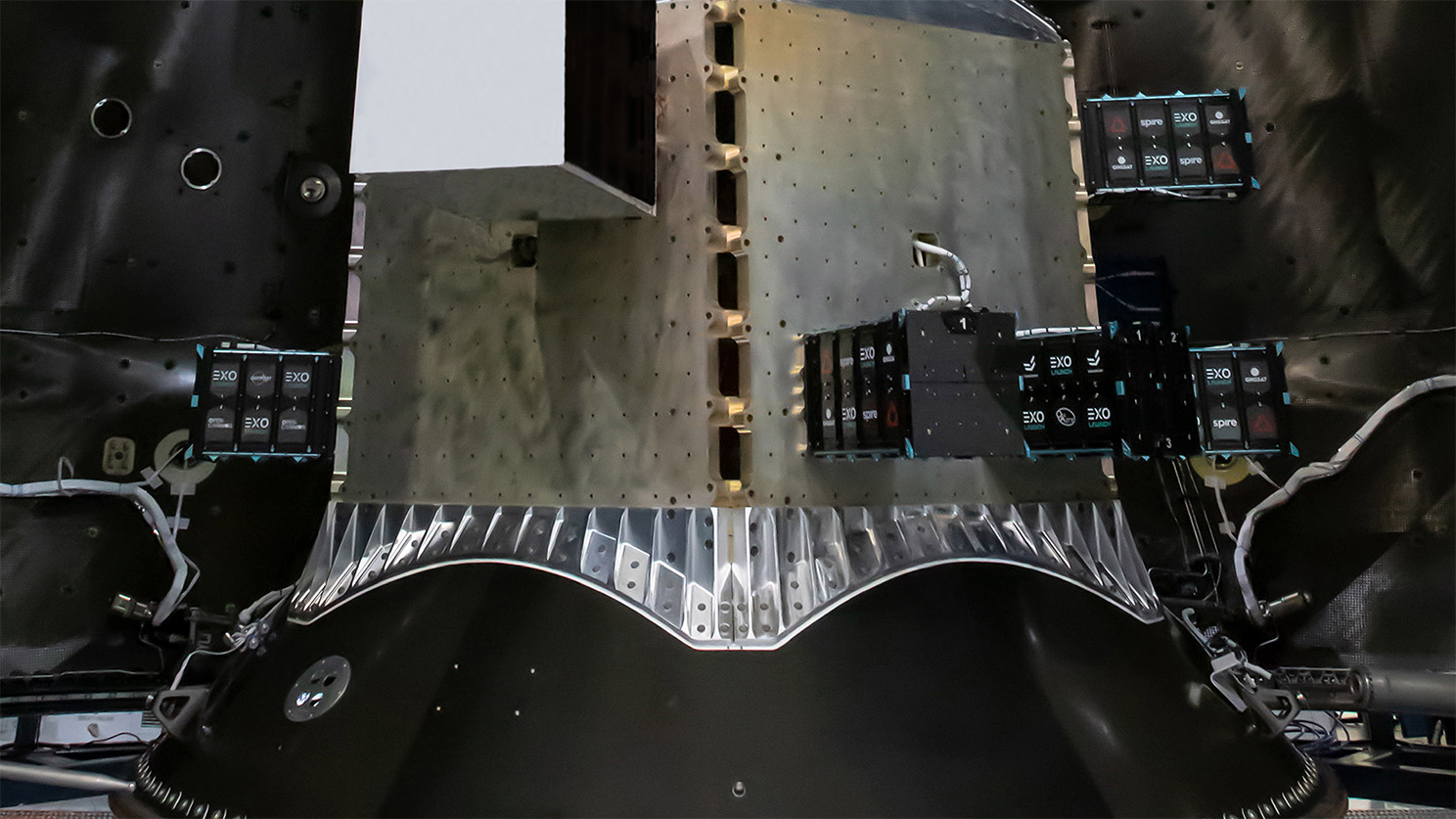
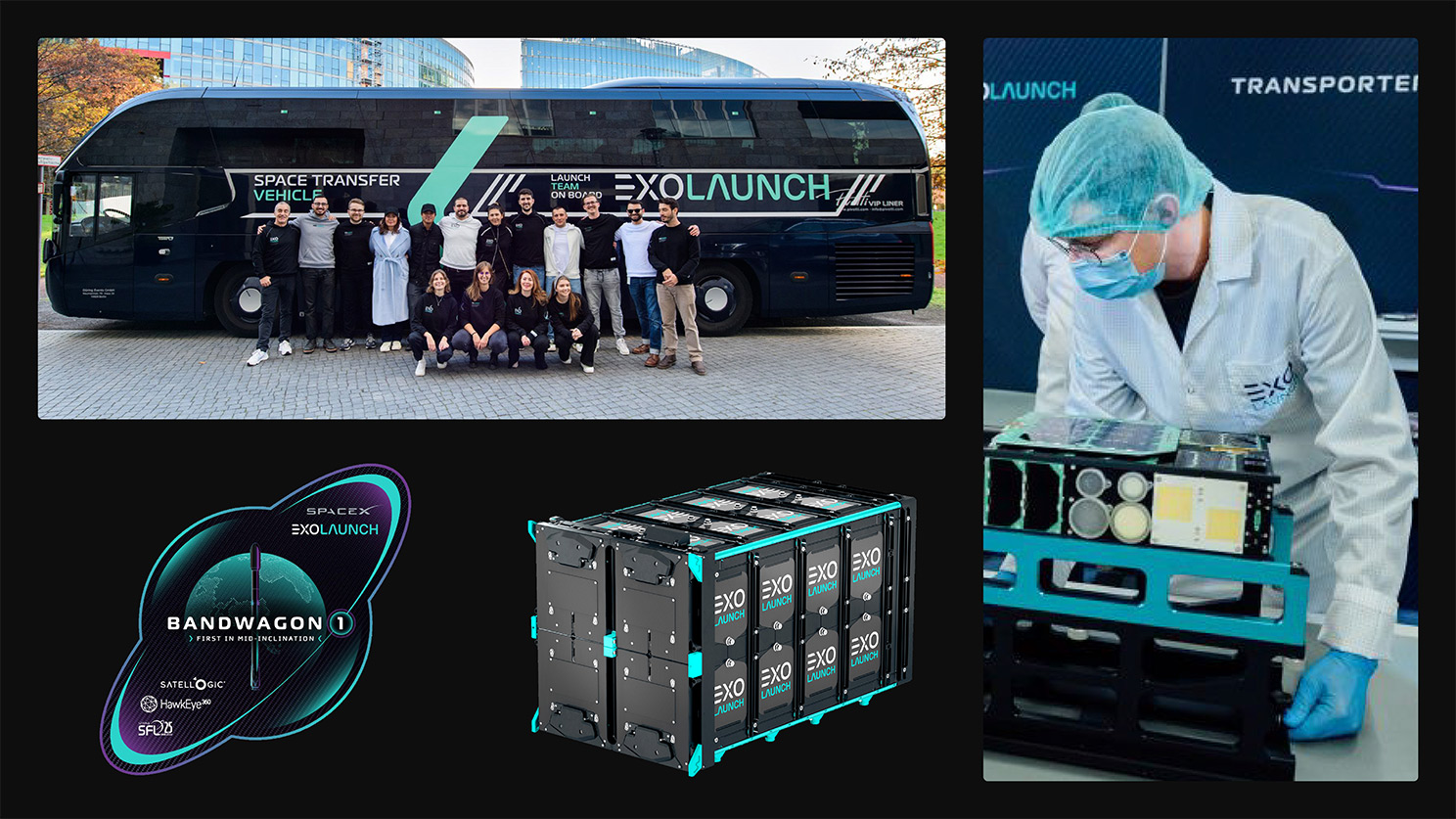
Their approach? Green accent colors – used relentlessly across absolutely everything.
Buses (the terrestrial kind), clean room hairnets, mission patches and of course, their products. A small touch, but a brilliant move in an industry where colour on hardware is rare.
Spotting that splash of green in the payload stack means one thing: Exolaunch is on board.
But on that same mission, tucked inside one of Exolaunch’s deployers was another piece of hardware sporting a mission-specific livery design. Named Veronika and commissioned by Slovakian financier Boris Procik, Spacemanic’s educational 1U nanosat became the world’s inaugural pink satellite after making it to orbit.

With companies like Exolaunch and Spacemanic leading the charge, branded space hardware is beginning to gain traction, both conceptually and across real product lines.
For instance, Nara Space’s cheeky April Fool’s campaign earlier this year teased their ‘fake’ OBSERVER Pro satellite in “three high-quality colors,” while brands like GATE Space and Pulsar Fusion intentionally incorporate their respective brand colours into various hardware components.
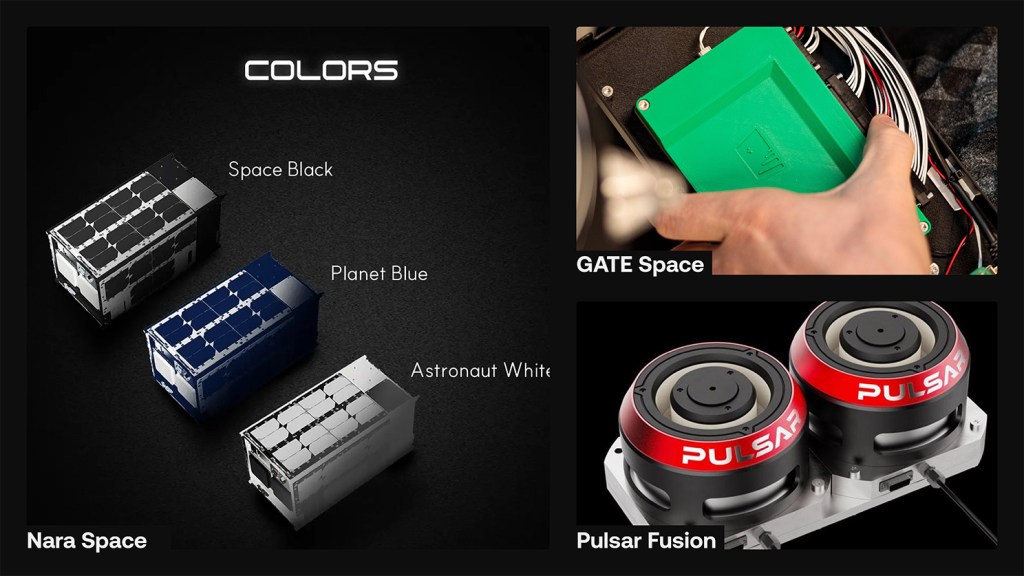
But the shift towards branded livery in space environments highlights a delicate tradeoff between brand visibility and thermal loads. As Kongsberg NanoAvionics explain, crafting a satellite livery design presents a unique challenge to a brand and its engineers.
“Coloring a satellite is a science and an art. Nearly every material and surface coating on the outside of a spacecraft works to either reflect, absorb, or radiate heat to keep the active components inside happy at all times.
– Kongsberg NanoAvionics
Light is not light but thermal energy. Black is not black but an absorber of all wavelengths. White is not white but a reflector of radiation.
Next time you see a satellite, imagine it as a thermal canvas that is painted by mixing various shades of anodization or single and multi-layer insulation to help it survive the coldness and hotness of space.”
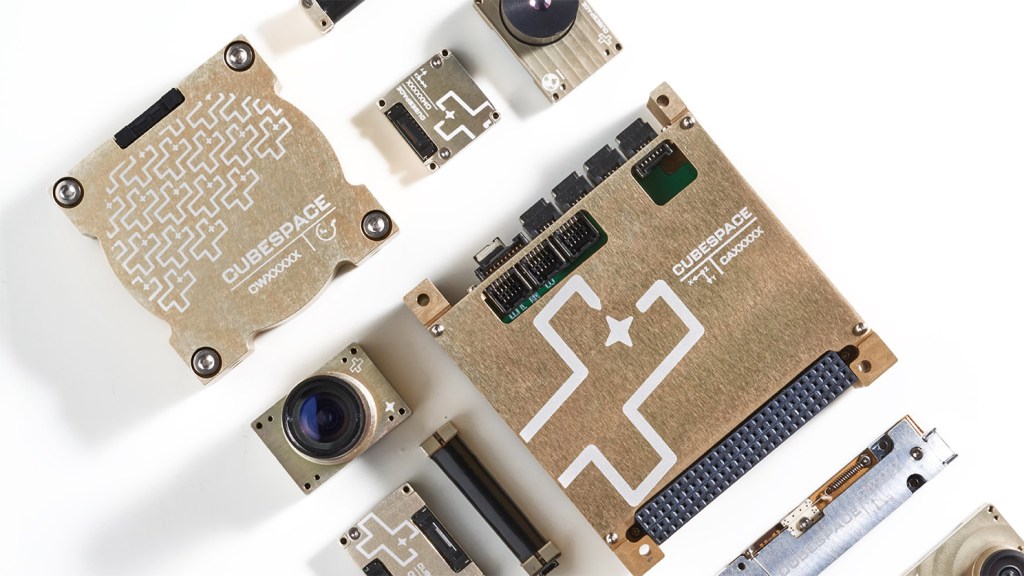
We’re just beginning to see branded patterns find their way into hardware livery designs too. Just look at CubeSpace (CS), who use theirs to bring visual cohesion to an extensive portfolio of hardware products.
Planet Labs take a different approach, in 2022 they offered artists, employees and members of the public an opportunity to create custom livery designs for each of their Dove satellites.
Participants were invited to submit artwork which is laser etched into the surfaces of the satellites before integration and launch, contributing to what Planet describe as ‘the largest art show in Earth’s orbit’.
By welcoming a diverse range of participants, from toddlers to politicians, the project reinforces Planet’s emphasis on democratisation, building a community of fans in the process.
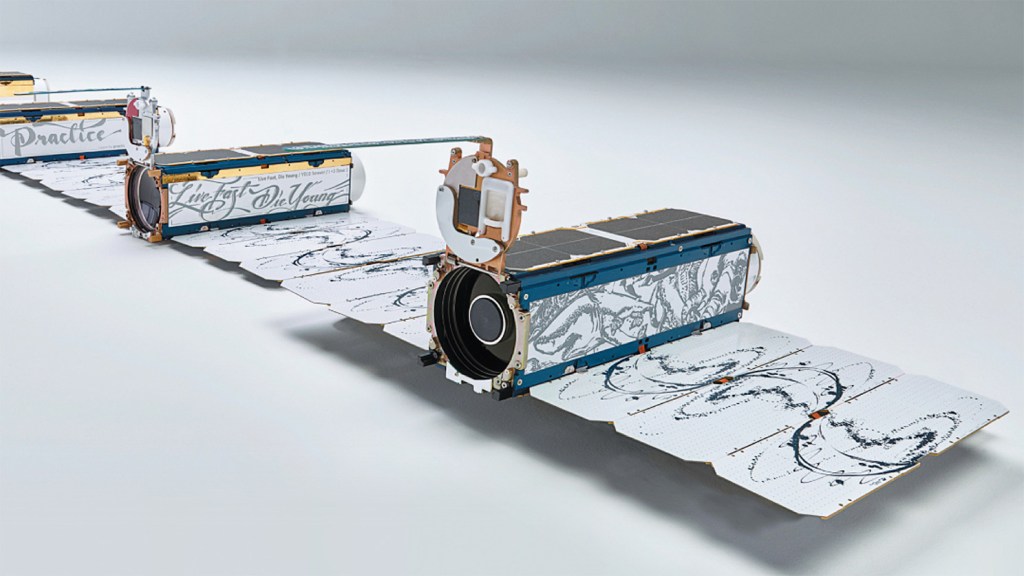
Scale reproductions of some of the satellites have even found their way into public and private collections in the Smithsonian in Washington DC and the United Nations in Vienna.
While livery design may seem like a small cosmetic enhancement, it can open the door to bigger opportunities. Helping to transform a piece of hardware into a brand ambassador, cultural artifact or educational platform — while making it easy to spot across an expo hall, in the workshop or in a crowded payload stack.
When space hardware is going to be seen by customers, investors, prospective employees and plenty of other people, adding a splash of storytelling through livery design makes it work just that little bit harder.

 Ed Fyfe Design